
Measuring AI search is like watching a claw machine. Measuring SEO is like using a vending machine.
For the last 20+ years, consumers typed a query into Google and got a list of links and a few ads. Marketers built an entire industry around gaming this system through SEO—organic and paid strategies to make sure your products and services show up when someone searches for them.
Measuring SEO is straightforward. You track search volume, rankings, and clicks. In a way, it’s like a vending machine. Push a button, get a Snickers bar (or, you know, SERP data).
AI search is a completely different scenario. People aren’t typing in keywords. They’re having multi-threaded conversations with LLMs to get to an answer. So determining your visibility in AI search is more like a claw machine.

Instead of plucking a single keyword (press B7, get a Snickers), the model interprets the entire conversation—context, follow-ups, preferences—nudging the claw right, left, and around before dropping it on whatever information it thinks is most relevant to build an answer.
Unlike SEO, where SERPs are relatively standardized, there’s no universal ranking in AI search. Results vary based on how well information is structured and who the user is, what they’ve said, and what the model knows about them. Instead of measuring one keyword across the internet, you’re measuring an infinite number of conversational permutations—and trying to answer one question: is my product or service showing up?
This makes AEO/GEO much harder to not only measure but strategize around. It’s not about keywords anymore. If AI search is a claw machine taking a different route every time, the goal isn’t owning one vending machine slot. It’s stuffing the entire claw machine with your products.
What does this mean for the future of property marketing?
Over the past month, we analyzed 250,000+ renter conversations across 60,000 multifamily communities. The data was pretty eye opening: 75% of communities never surfaced in AI answers, while the top 5% captured more than half of all mentions.
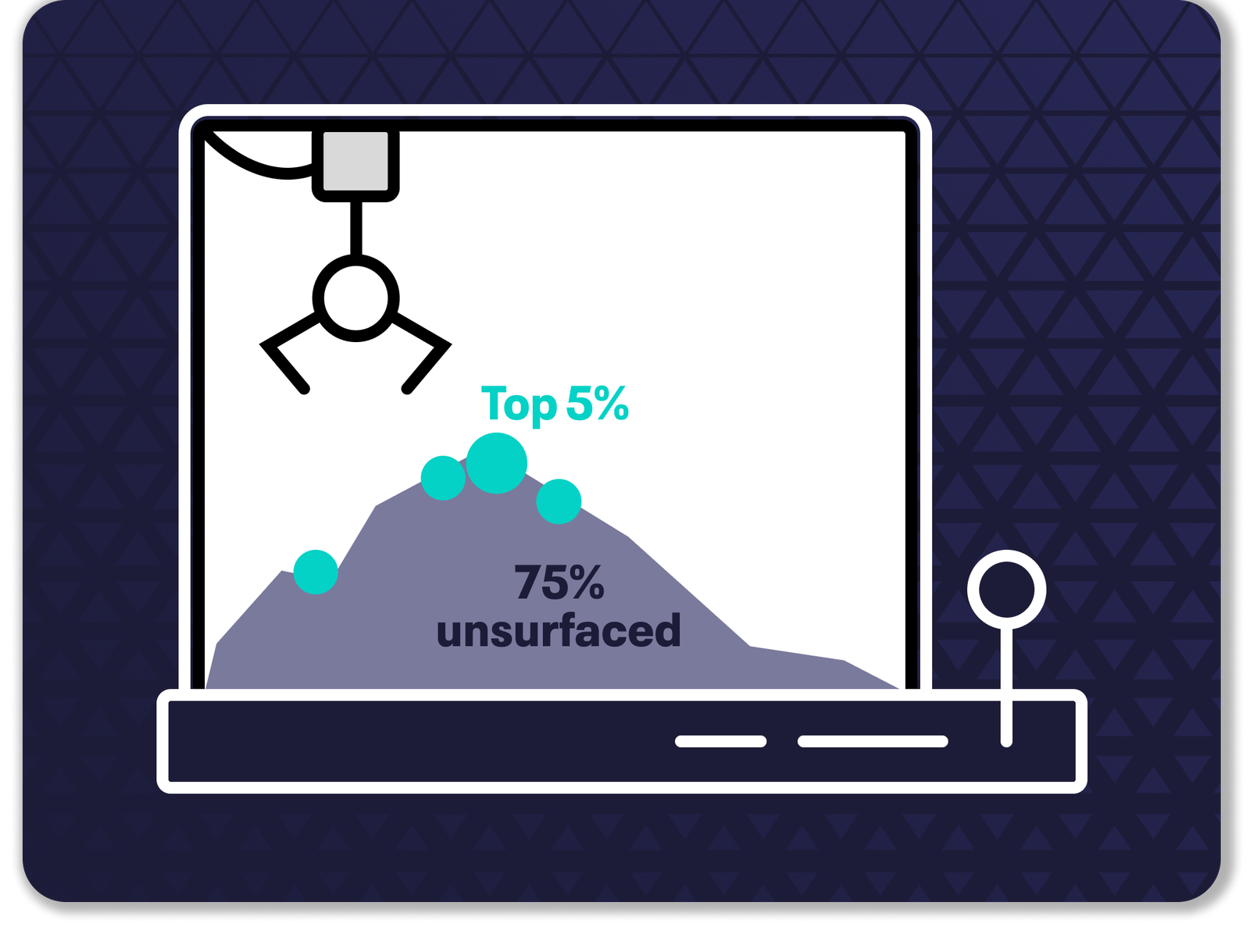
These companies are spending thousands—often tens of thousands—per month on SEO, paid ads, and ILS platforms like Zillow and Apartments.com. But as more renters start their search inside LLMs, those investments are delivering diminishing returns.
So how do you monitor and improve AI visibility?
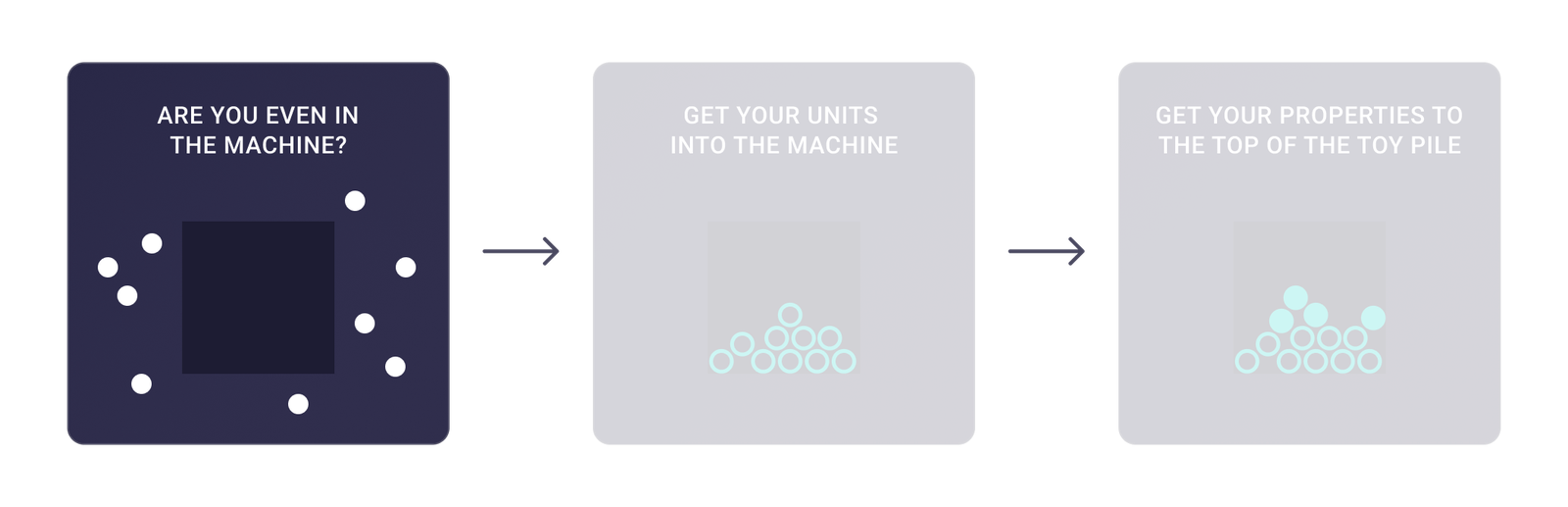
Step 1: Are you even in the machine?
Before you fix anything, you need to know if your units are inside the glass box at all.
Most answer engine optimization (AEO) tools today only tell you whether an AI model recognizes your property name. That’s brand awareness, not visibility. The real question is: Can the model identify and return the specific units that match what a renter is actually asking for?
Across nearly 60,000 communities we studied, many had no mentions at all. And among those that did, over 30,000 appeared just once across thousands of AI queries—a single toy buried in the pile.
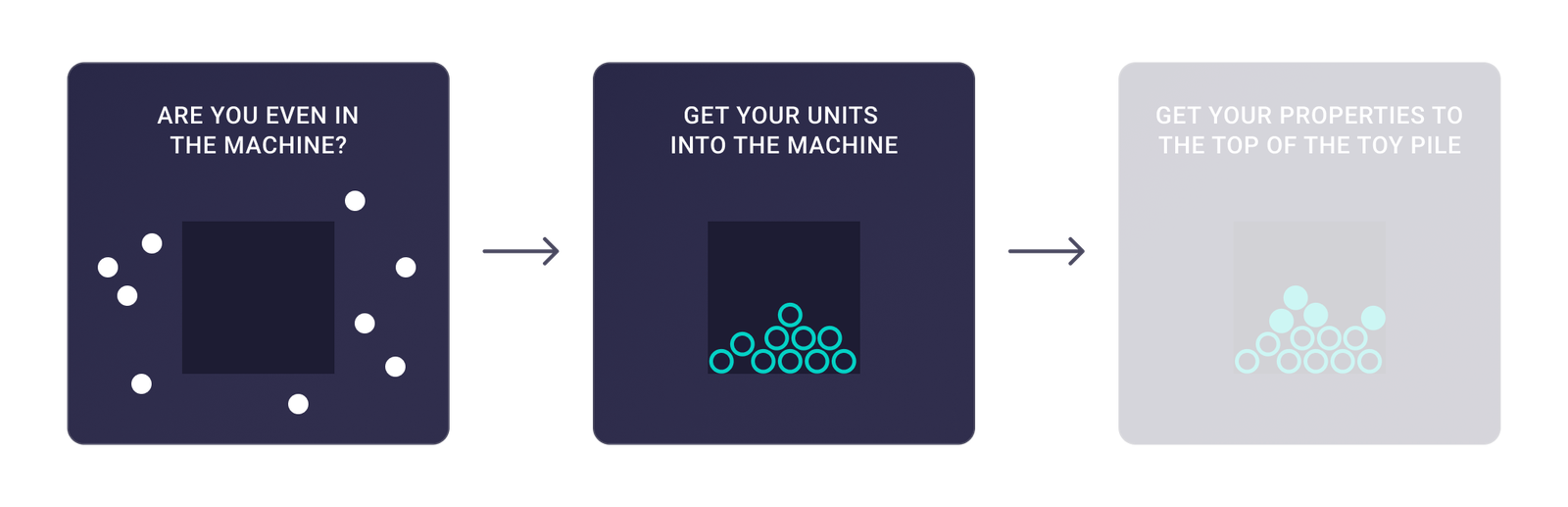
Step 2: Get your units into the machine
You can’t get picked by the claw if your prizes aren’t in the machine.
We’ve seen properties with brand-new pools score zero on pool-related AI queries simply because the model didn’t know the amenity existed. The same thing happens at the unit level.
If your units and amenities aren’t scanned, documented, and discoverable, even your biggest capital investments disappear in highly specific, renter-driven conversations.
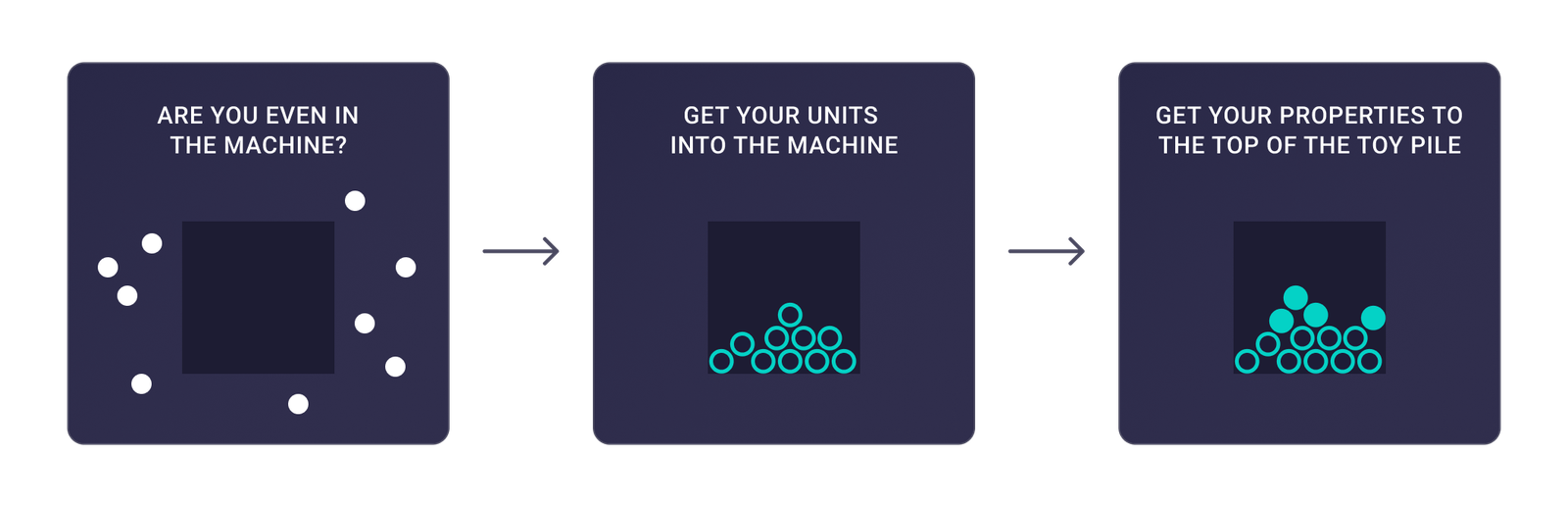
Step 3: Get your properties to the top of the toy pile
Not all toys in the claw machine are equally grabbable. Some are buried. Some are stacked perfectly on top.AI models are moving away from crawling scattered websites because it’s too costly. Instead, they prioritize clean, structured, machine-readable data that makes it cheap and easy to answer renter questions.
The clearer and more structured your data, the fewer guesses the model has to make—and the more likely the claw is to grab your units and drop them into an answer.
If you’re wondering how your community is actually showing up in AI search, we built Peek Discover to answer that. It simulates real renter questions, runs thousands of prompts across major LLMs, and shows where (and how often) your properties, units, and amenities appear.
You can pull a free report here. And if you want to swap notes on AI search, unit-level tours, or your favorite vending machine snacks, my inbox is open at audrey@peek.us.